
Consensus
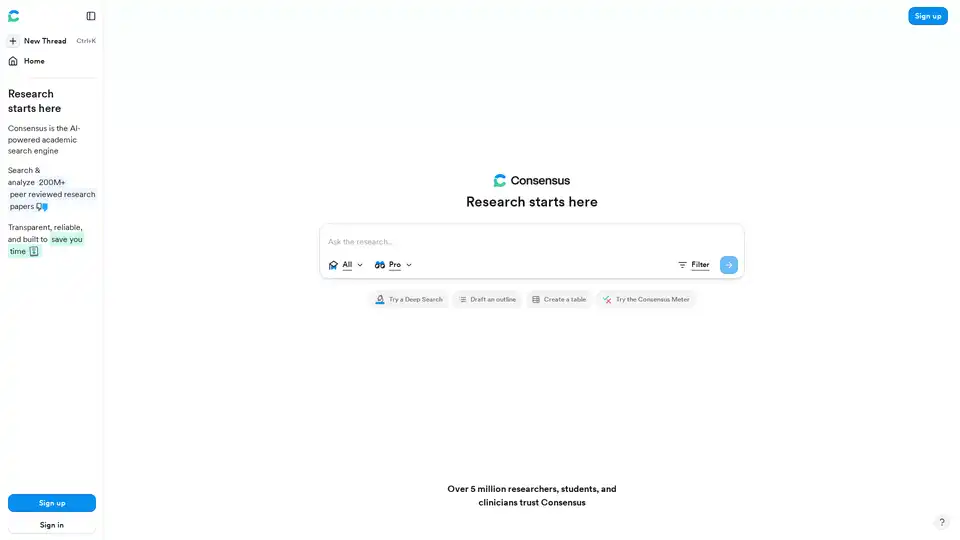
Overview of Consensus
What is Consensus?
Consensus is an AI-powered search engine designed to accelerate the research process. It leverages artificial intelligence to analyze over 200 million peer-reviewed research papers, helping researchers, students, and clinicians quickly find answers and insights in scientific literature.
How does Consensus work?
Consensus works by using AI to extract and summarize key findings from scientific papers. Instead of just providing a list of search results, Consensus identifies the degree of consensus around a topic, providing transparent and reliable information. This approach saves users countless hours by highlighting the most relevant papers with clear summaries and identifying their study designs.
Key Features:
- AI-Powered Search: Employs AI to search and analyze over 200 million peer-reviewed research papers.
- Transparent Results: Shows the degree of consensus on a topic based on scientific evidence.
- Time-Saving Summaries: Provides clear summaries of research papers, highlighting key findings and study designs.
- Drafting Tools: Offers tools for drafting outlines and creating tables to streamline the research process.
- Consensus Meter: Assesses the strength of the consensus on a particular research question.
Who is Consensus for?
Consensus is designed for a wide range of users, including:
- Researchers: To quickly gather real, peer-reviewed sources and identify key studies.
- Students: To streamline their dissertation workflow and write with clarity and confidence.
- Clinicians: To stay updated with the latest advancements in healthcare and medicine.
Why choose Consensus?
- Saves Time: Quickly identifies relevant papers and summarizes key findings.
- Enhances Clarity: Provides clear and transparent information on the consensus around a research topic.
- Improves Confidence: Helps users write with confidence by providing access to reliable, peer-reviewed sources.
Examples of Questions You Can Ask:
- Do LLMs have emergent capabilities not explicitly in the training data?
- What are the applications of AI in healthcare?
- Can bilingualism improve cognitive abilities in children?
- Does regular exercise benefit mental well-being?
- Does social media negatively impact mental health?
How to use Consensus?
- Sign Up: Create an account to access all features.
- Search: Enter your research question in the search bar.
- Filter: Use filters to narrow down results.
- Analyze: Review the summaries and consensus meter to understand the findings.
Additional Resources:
- About Us: Learn more about the company and its mission.
- For Universities: Discover how Consensus can support academic institutions.
- Careers: Explore job opportunities at Consensus.
- Contact Us: Get in touch with the Consensus team.
AI Task and Project Management AI Document Summarization and Reading AI Smart Search AI Data Analysis Automated Workflow
Best Alternative Tools to "Consensus"
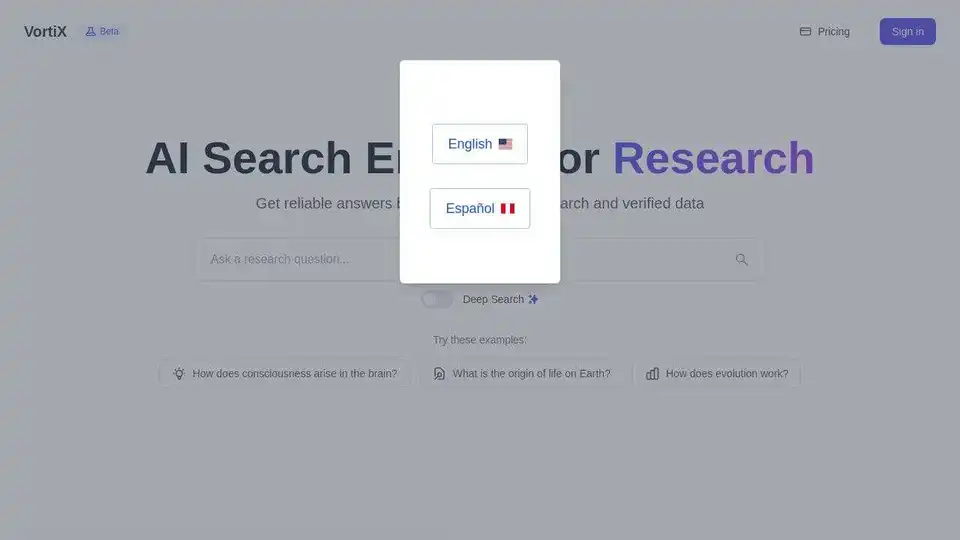
VortiX is an AI-powered search engine designed for scientific research. Find relevant academic papers, generate summaries, and synthesize insights to accelerate your research process.
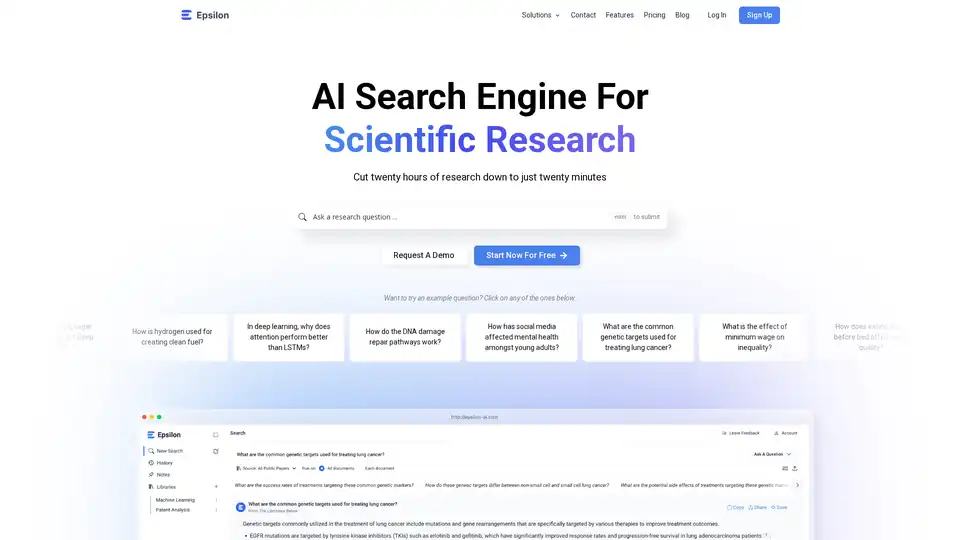
Epsilon is an AI search engine for scientific research, providing cited answers, publication search, and information extraction from 200M+ papers. Trusted by 30,000+ researchers.
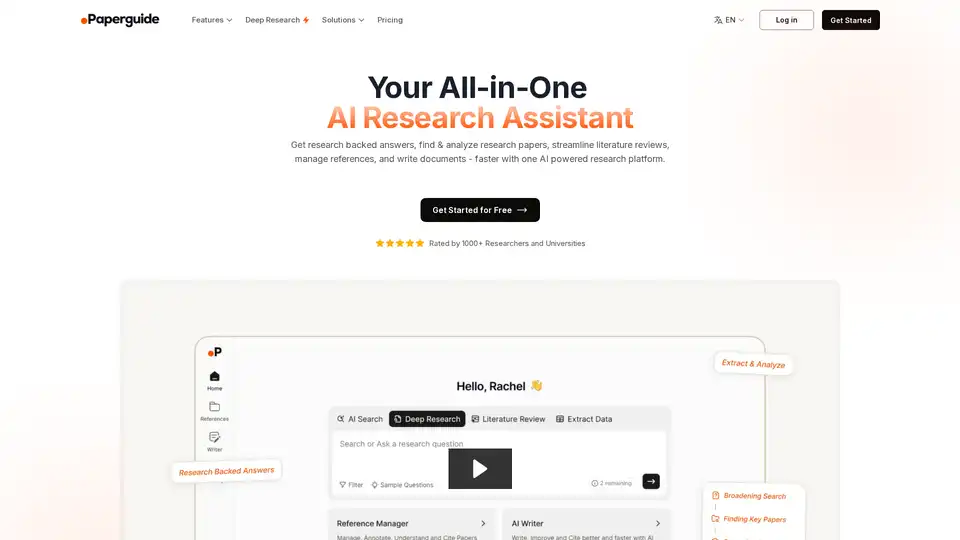
Paperguide is an AI research assistant that helps you find & analyze research papers, manage references, get research-backed answers, and write documents faster.
Semantic Scholar is a free, AI-powered research tool that helps scholars discover relevant scientific literature by understanding the semantics of research papers.