
Epsilon
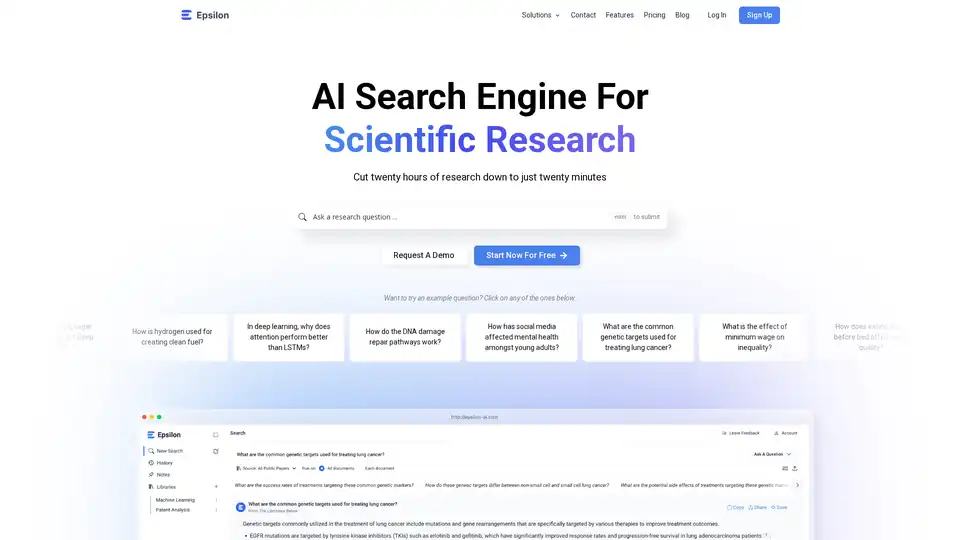
Overview of Epsilon
Epsilon: The AI Search Engine Revolutionizing Scientific Research
What is Epsilon? Epsilon is an innovative AI search engine designed to drastically reduce the time researchers spend on literature reviews and evidence gathering. It leverages the power of AI to scan over 200 million academic papers, providing summarized answers with inline references, similar to a ChatGPT experience but grounded in scientific literature.
How does Epsilon work? Epsilon uses a dataset from Semantic Scholar, encompassing a vast collection of academic papers from sources like PubMed, arXiv, and Papers With Code. When a user poses a research question, Epsilon identifies the top 100 related papers and employs GPT-4 to generate a summary of the scientific information, ensuring factual and trustworthy results through citations.
Key Features and Benefits
- Cited Answers: Get direct answers to research questions with inline citations, saving hours of manual searching.
- Publication and Patent Search: Efficiently find relevant publications and patents, grouped into latest research, key texts, and most relevant articles.
- Information Extraction: Scan multiple papers for key information to evaluate claims, conduct meta-analyses, and find evidence.
- Paper Synthesis: Upload papers to get comprehensive summaries of introductions, results, and conclusions. Create searchable libraries to synthesize findings across trusted sources.
Why Choose Epsilon?
Epsilon stands out due to its commitment to providing factual and trustworthy information, backed by citations to academic literature. It is designed to address the specific needs of researchers, offering features tailored to streamline their workflows.
Who is Epsilon for?
Epsilon is ideal for:
- Researchers conducting literature reviews
- Academics searching for evidence
- Grant writers
- Teams onboarding new members
- Anyone learning new topics in a scientific field
Trusted by Leading Institutions
Epsilon is used by researchers from institutions worldwide, underscoring its reliability and effectiveness in accelerating scientific research.
Pricing Plans
Epsilon offers several pricing plans to cater to different needs:
- Free: A free trial offering up to 25 searches and paper uploads.
- Student: Unlimited searches and libraries for active students.
- Professional: Includes early access features and priority support.
- Organization: Custom plans available with patent analysis.
How to Use Epsilon
- Ask a Question: Enter your research question into the search bar.
- Review Cited Answers: Epsilon provides a ChatGPT-like answer with inline references.
- Search Publications: Find and group publications and patents efficiently.
- Extract Information: Scan multiple papers for key insights.
- Synthesize Papers: Upload and summarize papers to build searchable libraries.
Technology and Privacy
Epsilon utilizes a dataset from Semantic Scholar and AI from GPT-4. It prioritizes user privacy by ensuring that search queries and uploaded papers cannot be traced back to individuals.
Epsilon is transforming how scientific research is conducted, making it faster, more efficient, and more reliable. Best way to stay ahead in the rapidly evolving world of scientific discovery.
AI Task and Project Management AI Document Summarization and Reading AI Smart Search AI Data Analysis Automated Workflow
Best Alternative Tools to "Epsilon"
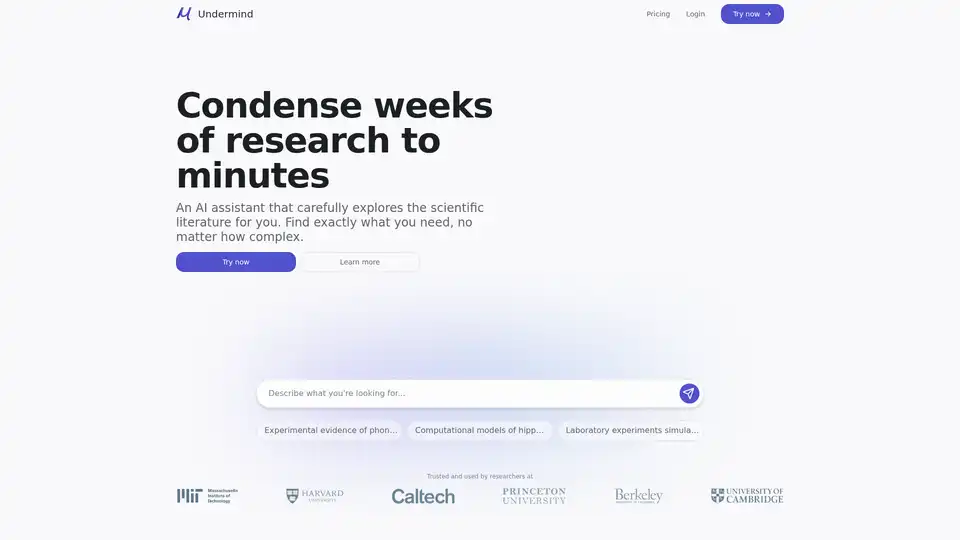
Undermind is an AI-powered research assistant that autonomously reads hundreds of scientific papers to deliver precisely relevant insights, condensing weeks of research into minutes.
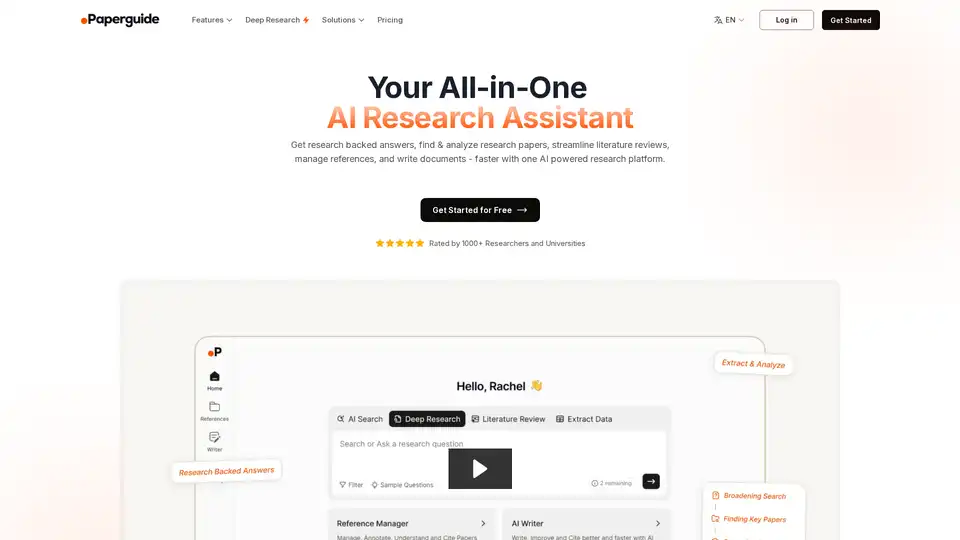
Paperguide is an AI research assistant that helps you find & analyze research papers, manage references, get research-backed answers, and write documents faster.
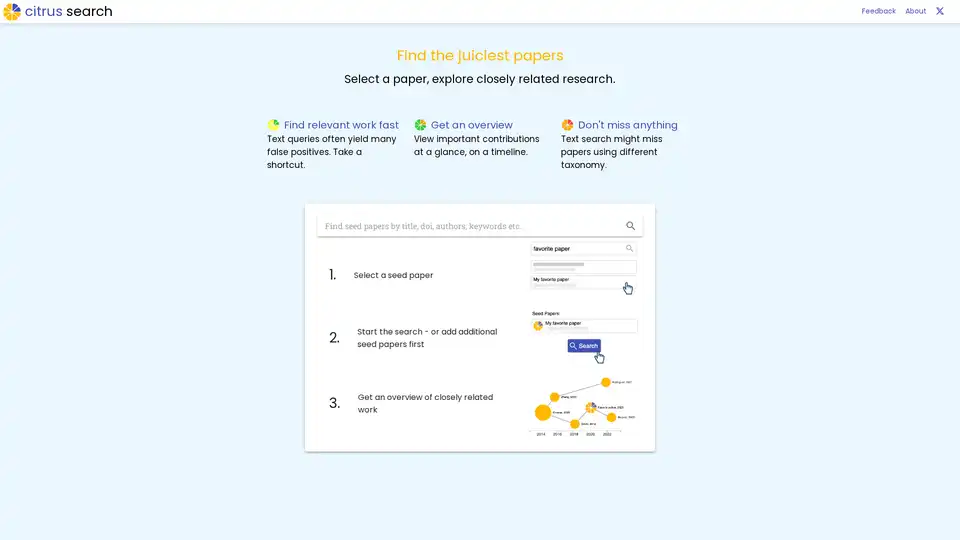
Discover relevant scientific papers quickly with Citrus Search, an AI-driven tool that uses similarity measures like citation networks and content analysis to provide overviews of related research from over 200 million publications.

Undermind is an AI research assistant that autonomously explores scientific literature. It helps researchers quickly find relevant insights from thousands of papers, condensing weeks of work into minutes.