
Weld
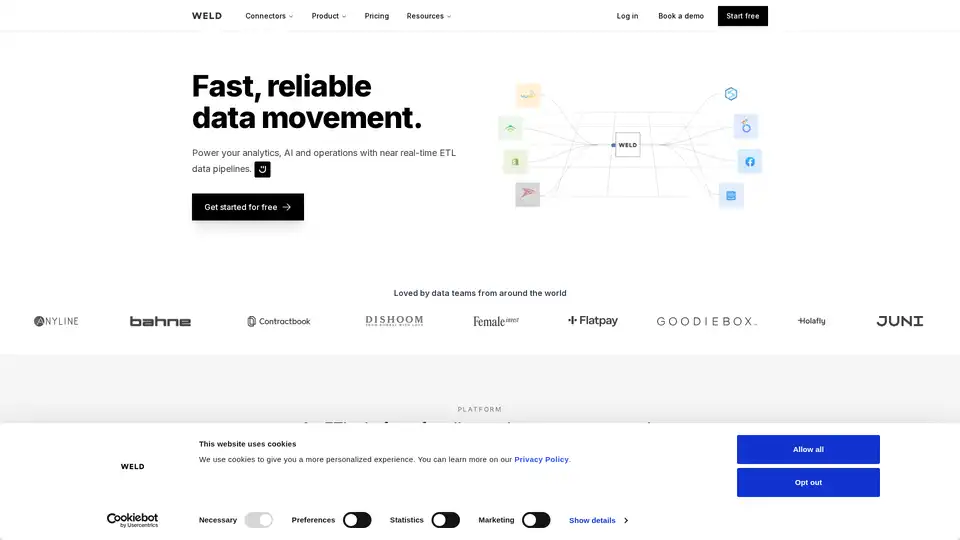
Overview of Weld
What is Weld?
Weld is a modern ETL (Extract, Transform, Load) platform designed to empower data teams with fast and reliable data movement. It facilitates near real-time data pipelines to support analytics, AI, and operational workflows. Weld helps businesses integrate data from various sources into their data warehouse or storage, making it analysis-ready.
How does Weld work?
Weld simplifies data integration through automated schema migrations, API versioning, and endpoint maintenance. The platform’s key features include:
- Data Extraction: Weld can extract and load data from numerous sources directly into data warehouses or storage.
- Data Transformation: The platform allows users to transform data using their preferred tools, such as dbt, with orchestration and monitoring capabilities.
- Data Loading: With its custom connector feature, Weld allows users to build connectors for any API, streamlining the data loading process.
Key Features
- Zero Maintenance Data Pipelines: Automatic schema migrations, API versioning, and endpoint maintenance eliminate the need for constant developer oversight.
- Schema Change Detection: Automatically detects schema changes, locking schemas at the source and destination to prevent data mismatches.
- Duplicate Detection: Identifies and flags duplicate data entries, maintaining data quality.
- Real-Time Monitoring: Pipeline dashboards provide real-time visibility into pipeline status, showing running, queued, or errored processes.
- Self-Healing Pipelines: Automatically retries failed syncs, ensuring reliable data delivery.
Integration and Connectivity
Weld integrates with a variety of modern data technologies, including Google BigQuery, Snowflake, and Databricks. It supports numerous connectors, including popular marketing, sales, finance, and engineering applications, as well as databases and file storage systems.
- Popular Marketing Connectors: Google Ads, Facebook Ads, TikTok Ads, Amazon Ads
- Popular Application Connectors: Shopify, Klaviyo, Salesforce, HubSpot
- Popular Database Connectors: PostgreSQL, MongoDB, MS SQL Server, Airtable, MySQL
- Popular File Connectors: Excel, Google Sheets, FTP, Google Drive, OneDrive
Transform Your Data
Weld seamlessly integrates with dbt, enabling users to run and monitor dbt jobs with scheduling, logging, and alerting. Users can also orchestrate other transformation platforms alongside their pipelines, providing a unified view of data processing.
Weld Connect REST API
The platform offers a production-ready REST API for programmatic control of Weld. The API allows users to automate connections, configure ELT syncs, monitor status, and embed the flow inside their own products.
Custom Connector
Weld’s custom connector feature enables users to build a connector for any API in days, not weeks. Users only need to implement two endpoints: /schema to describe the tables and POST / to return data. Weld handles the scheduling, retries, monitoring, and loading of data into the warehouse.
Why Choose Weld?
Weld offers several compelling benefits:
- Data-Driven Success: Known for helping data-driven companies achieve success.
- Cost Savings: Reportedly saves companies over €50k annually.
- High Uptime: Boasts 99.9% uptime across all sync operations.
- Scalability: Manages over 150,000 daily syncs and trillions of records annually.
- Return on Investment: Provides a 200%+ yearly return on investment.
Security
Weld emphasizes enterprise-grade security with SOC 2 Type I, II & III, ISO 27001 certification, HIPAA-ready processes, end-to-end encryption, access control, and GDPR compliance.
Who is Weld for?
Weld is designed for data teams and data-driven companies seeking to streamline their data integration processes and improve efficiency. Customer stories highlight its impact on businesses across various sectors, including e-commerce, finance, and marketing.
- Holafly: Transformed data management and scaled globally with Weld.
- Dishoom: Scaled data operations without scaling its team.
- Flatpay: Optimized marketing efficiency with Weld.
- VitaMoment: Journey to KPI-driven growth and data ownership.
How to use Weld?
- Sign Up: Start with a free account.
- Connect Data Sources: Use pre-built connectors to link various data sources.
- Set Up Pipelines: Configure data pipelines to extract, transform, and load data.
- Monitor and Manage: Use real-time dashboards to monitor pipeline status and performance.
Best way to implement Weld
- Start with Key Data Sources: Prioritize integrating core data sources to gain immediate insights.
- Leverage dbt: Use dbt for data transformations within the Weld platform.
- Monitor Data Quality: Implement data quality checks to maintain accurate and reliable data.
Conclusion
Weld is a robust ETL platform that simplifies data integration and empowers data teams to drive analytics, AI, and operational efficiencies. Its focus on automation, reliability, and security makes it an excellent choice for modern data-driven organizations aiming to unlock the full potential of their data.
AI Task and Project Management AI Document Summarization and Reading AI Smart Search AI Data Analysis Automated Workflow
Best Alternative Tools to "Weld"
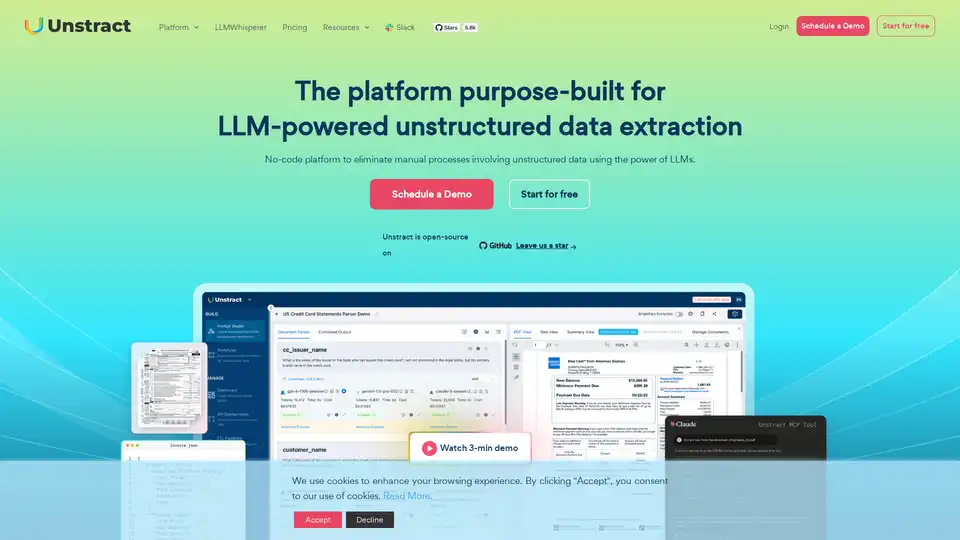
Unstract is an open-source, no-code platform purpose-built for extracting data from unstructured documents using LLMs, with high accuracy. Easily deploy API and ETL pipelines for your unstructured data.
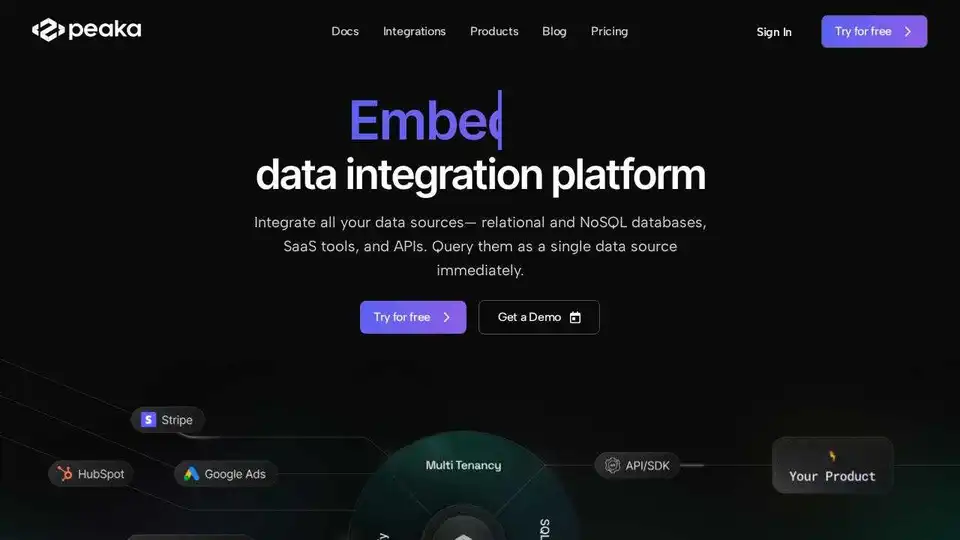
Peaka is a zero-ETL data integration platform that integrates databases, SaaS tools, NoSQL and APIs into a single data source. Build your data stack in minutes and democratize data access across your organization.
Paradime is an AI-native data platform replacing dbt Cloud. It offers AI-powered development, automated pipelines, and intelligent cost optimization to boost productivity, reduce downtime, and cut costs for data teams.
Databricks is a unified data, analytics, and AI platform that helps enterprises build better AI through a data-centric approach. It simplifies ETL, data warehousing, governance, and AI on its Data Intelligence Platform.