
Openlayer
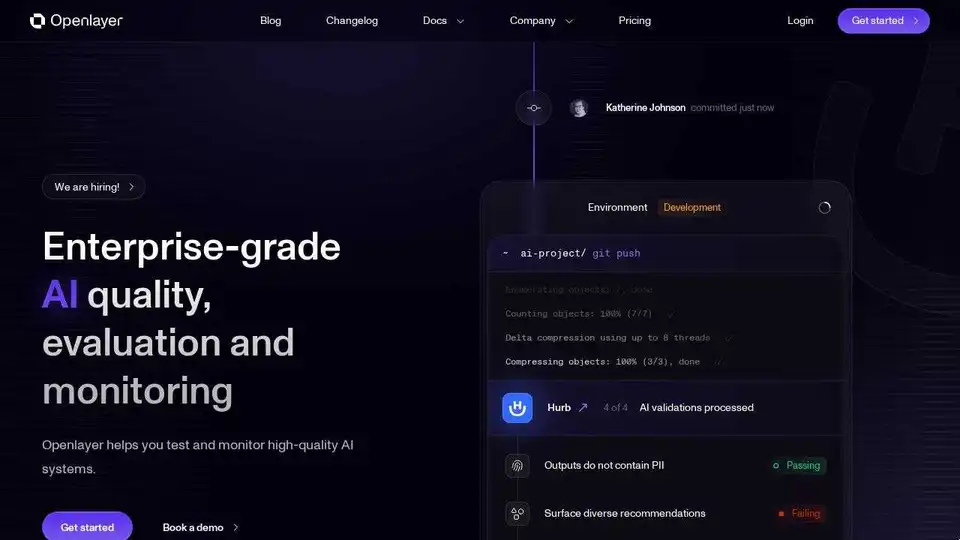
Overview of Openlayer
Openlayer: AI Evaluation and Observability for Enterprises
Openlayer is an enterprise platform designed to provide unified AI evaluation, observability, and governance for AI systems, covering everything from traditional machine learning (ML) models to Large Language Models (LLMs). It aims to help teams catch issues early, maintain a watchful eye on production environments, and create best-in-class AI solutions.
What is Openlayer?
Openlayer is an AI evaluation and observability platform designed to help enterprises manage and govern their AI systems effectively. It provides tools and capabilities for testing, monitoring, and governing AI systems throughout their lifecycle, from development to production.
How does Openlayer work?
Openlayer integrates with your existing AI infrastructure to provide real-time monitoring, automated testing, and governance checks. It allows you to:
- Test AI systems: Offers customizable tests to systematically evaluate AI model performance and prevent regressions.
- Monitor production requests: Observes AI systems in real-time to identify and fix issues quickly.
- Ensure data quality: Automates checks for data schema changes, drifts, and anomalies to prevent bad data from affecting models.
- Maintain compliance: Aligns AI systems with industry standards like ISO/IEC 42001, OWASP, NIST, and the EU AI Act.
Key Features and Benefits
- Unified AI Evaluation: Provides a comprehensive platform for evaluating AI models and systems.
- Real-time Monitoring: Observes production requests in real-time, enabling quick issue resolution.
- Automated Data Quality Checks: Ensures data integrity by automatically testing for schema changes, drifts, and anomalies.
- Effortless Governance: Simplifies AI compliance with industry standards and regulations.
- Collaboration: Facilitates team collaboration with shared workspaces and role assignments.
Use Cases
Openlayer can be applied across various industries and use cases, including:
- Cybersecurity: Ensuring phishing messages do not disclose AI generation and maintaining authenticity.
- E-commerce: Validating real-time fraud detection models.
- Recruiting: Ensuring fairness and accuracy in AI-driven talent matching systems.
Why is Openlayer important?
In today's rapidly evolving AI landscape, ensuring the reliability, safety, and compliance of AI systems is paramount. Openlayer provides the necessary tools and capabilities to:
- Reduce risks: By catching issues early and continuously monitoring AI systems, Openlayer helps mitigate potential risks associated with AI deployments.
- Improve model performance: Through systematic testing and monitoring, Openlayer helps identify areas for improvement and optimize model performance.
- Ensure compliance: Openlayer helps organizations align their AI systems with industry standards and regulations, reducing the risk of non-compliance.
Openlayer in Action
- Revenue Increase: One company observed a sharp increase in revenue after implementing Openlayer monitoring features.
- Deployment Frequency: Another company saw a 6x increase in deployments and a 53% increase in throughput after adopting Openlayer.
Integrations
Openlayer seamlessly integrates with popular tools and platforms, including:
- Git: Integrates with Git for version control and collaboration.
- SDKs: Offers SDKs in popular programming languages for easy integration.
- LLM Providers: Works out of the box with various LLM providers.
- REST APIs and CLI: Fully customizable via a CLI and REST API.
Templates
To help users get started quickly, Openlayer offers a variety of templates for common AI patterns, including:
- PDF Extraction: Create a resume processing pipeline using LangChain and Python.
- Question-Answering Retrieval: Build a RAG pipeline for question-answering using Azure OpenAI and Python.
- Simple Chatbot: Create a chatbot using OpenAI or LangChain with Python or TypeScript.
How to get started with Openlayer?
- Request a Demo: Contact the Openlayer team to schedule a live demo.
- Explore Templates: Start with a pre-configured template for common AI patterns.
- Integrate with Existing Tools: Seamlessly integrate Openlayer with your existing AI infrastructure using Git, SDKs, or REST APIs.
Conclusion
Openlayer is a comprehensive AI evaluation and observability platform that helps enterprises build, deploy, and govern AI systems with confidence. By providing unified evaluation, real-time monitoring, and automated compliance checks, Openlayer enables organizations to reduce risks, improve model performance, and ensure compliance with industry standards and regulations. Whether you're building traditional ML models or leveraging the power of LLMs, Openlayer can help you unlock the full potential of AI while mitigating potential risks.
AI Programming Assistant Auto Code Completion AI Code Review and Optimization AI Low-Code and No-Code Development
Best Alternative Tools to "Openlayer"
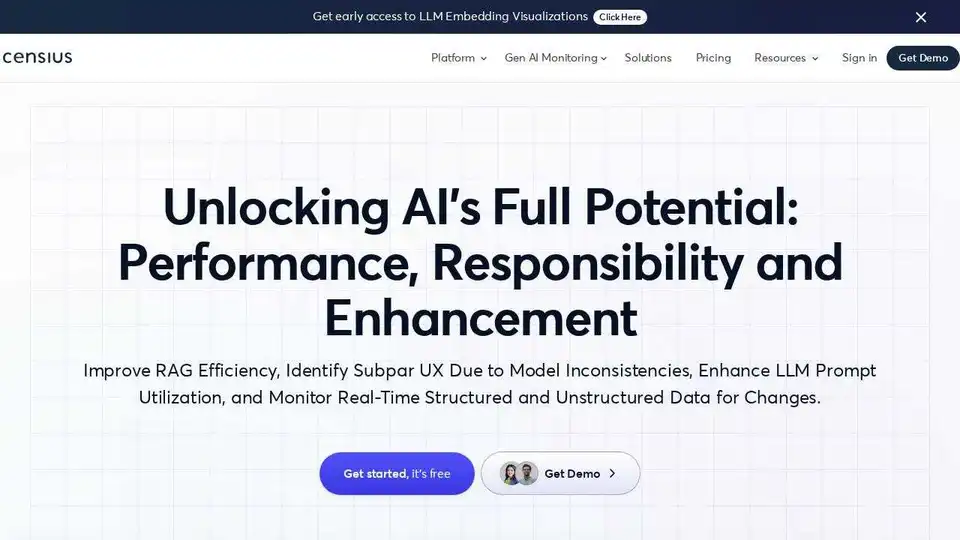
Censius AI Observability Platform helps teams understand, analyze, and improve the real-world performance of AI models with automated monitoring and proactive troubleshooting.
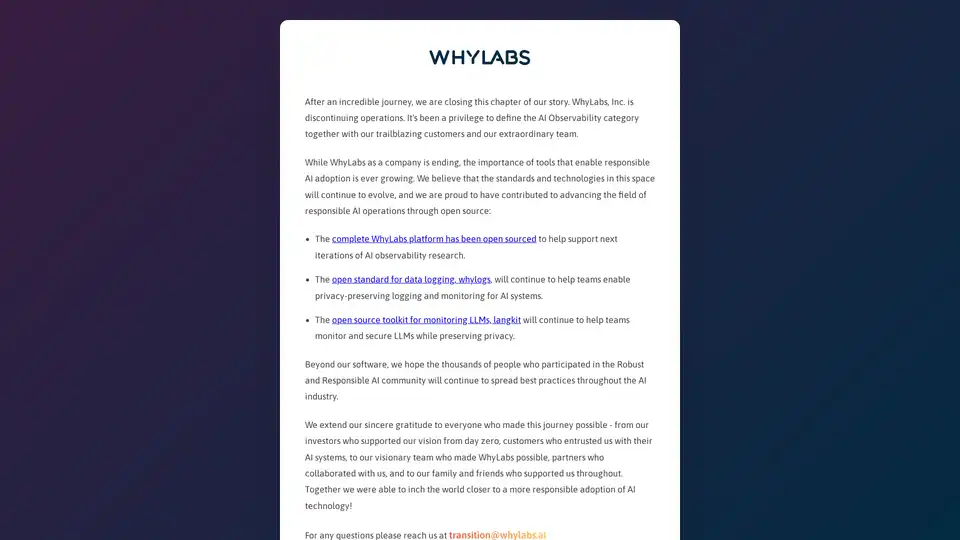
WhyLabs provides AI observability, LLM security, and model monitoring. Guardrail Generative AI applications in real-time to mitigate risks.

Monitor, analyze, and protect AI agents, LLM, and ML models with Fiddler AI. Gain visibility and actionable insights with the Fiddler Unified AI Observability Platform.
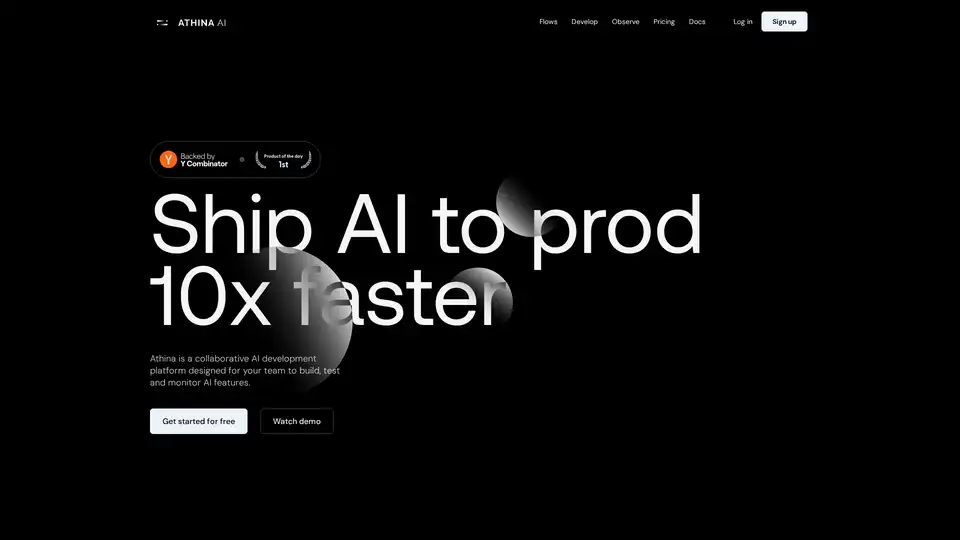
Athina is a collaborative AI platform that helps teams build, test, and monitor LLM-based features 10x faster. With tools for prompt management, evaluations, and observability, it ensures data privacy and supports custom models.