
Kindo
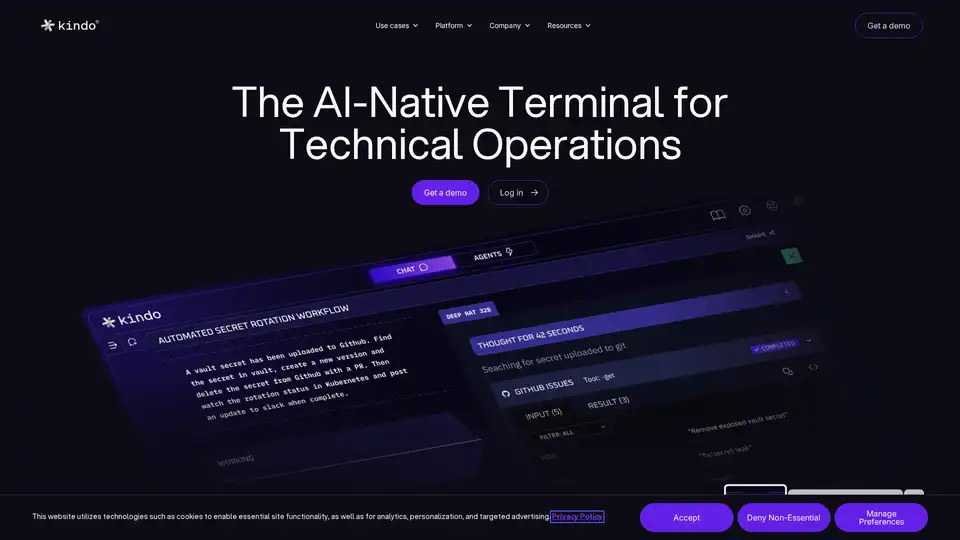
Overview of Kindo
What is Kindo?
Kindo is an AI-native terminal designed to centralize and streamline technical operations for security, development, and IT engineers. It serves as a unified hub where teams can plan, execute, and validate operations, bridging the gap between various tools, data sources, and environments. By integrating an AI-driven approach, Kindo aims to transform intent into tangible outcomes through trusted execution loops involving Chat Actions and Agents.
How does Kindo work?
Kindo operates as an integrated engineer environment, uniquely tailored for the AI-native enterprise. It connects directly to essential tools and layers such as Kubernetes clusters, cloud APIs, CI/CD pipelines, ITSM ticketing systems, and SIEM tools. The platform uses a DevSecOps-specific LLM (Large Language Model) that runs securely on-premises, ensuring full privacy and self-managed AI automation. Kindo's Deep Hat feature combines real-world adversary training with RAG (Retrieval-Augmented Generation) and low-latency inference, enabling context-aware decision-making at the forefront of infrastructure security and technical operations.
Key Functionalities:
- SOC & Incident Response: Enhances signal enrichment, reduces false positives, and prioritizes critical alerts, improving the overall incident response process.
- Identity & Access Management: Scans and manages identity risks by routing approvals and enforcing least privilege, thus cleaning up identity posture.
- Vulnerability Management: Validates infrastructure against guardrails and suggests Terraform changes to catch and fix cloud drift.
- Network Security: Provides a live network map, checks reachability between endpoints, and proposes changes needed for secure access.
- Red Teaming: Runs adversary simulations across logs, endpoints, and identities to expose security gaps.
- Governance, Risk & Compliance: Automates evidence collection, enforces policies, and generates audit-ready reports.
- Threat Intelligence: Transforms fresh threat intel into tested SIEM detections with mapped playbooks and evidence.
Why choose Kindo?
Kindo provides a multitude of benefits, significantly improving the efficiency and effectiveness of technical operations:
- Faster Resolution: Accelerates incident resolution times by automating and streamlining processes.
- Stronger Security: Enhances security posture through proactive vulnerability management and threat intelligence integration.
- Fewer Manual Tasks: Reduces manual overhead, freeing up engineers to focus on strategic tasks.
- Cost Savings: As highlighted by Peter Clay, CISO at AIREON, Kindo can lead to significant cost savings, with potential savings of over $2 million per year due to accelerated and simplified threat hunting processes.
Measurable ROI:
- Incident Response Automation: A global infrastructure provider reports annual savings of $2M+.
- CI/CD Rollback Automation: Reduces DevOps overhead by up to 80%.
- Audit-Ready Compliance Automation: Cuts audit preparation costs by 50–70%.
Who is Kindo for?
Kindo is designed for:
- Security Engineers
- DevOps Engineers
- IT Engineers
It is particularly useful for enterprises looking to move from fragmented tools to a centralized, AI-native operations hub. Companies that can benefit most from Kindo include those dealing with complex infrastructures, high volumes of alerts, and stringent compliance requirements.
Best way to use Kindo?
To maximize the benefits of Kindo, organizations should:
- Integrate Kindo with their existing tool ecosystem, including Kubernetes clusters, cloud APIs, CI/CD pipelines, and SIEM tools.
- Utilize Chat Actions and Agents to create trusted execution loops that convert intent into outcomes.
- Leverage Kindo’s AI automation capabilities to streamline and automate key operational processes, such as incident response, vulnerability management, and compliance.
- Take advantage of the Deep Hat feature for real-world adversary training and context-aware decision-making.
Conclusion
Kindo offers a transformative approach to technical operations by providing an AI-native terminal that integrates security, development, and IT engineering. Its comprehensive features, including AI automation, threat intelligence, and compliance automation, lead to significant improvements in efficiency, security, and cost savings. For enterprises seeking to streamline their operations and enhance their security posture, Kindo presents a powerful and innovative solution.
AI Programming Assistant Auto Code Completion AI Code Review and Optimization AI Low-Code and No-Code Development
Best Alternative Tools to "Kindo"
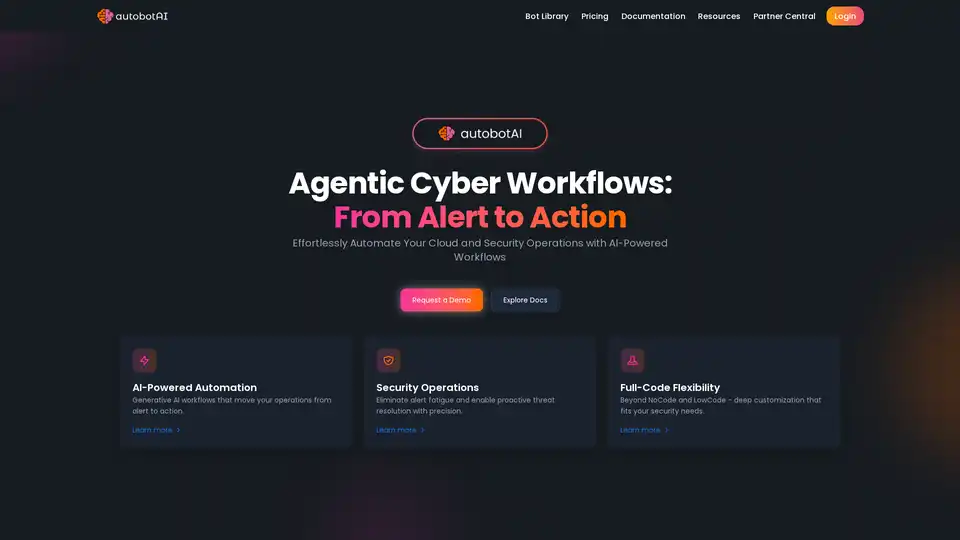
autobotAI is an AI-powered hyperautomation platform for cloud security and operations. It uses Generative AI to automate workflows, eliminate alert fatigue, and enhance decision-making with no-code, low-code, and full-code flexibility.
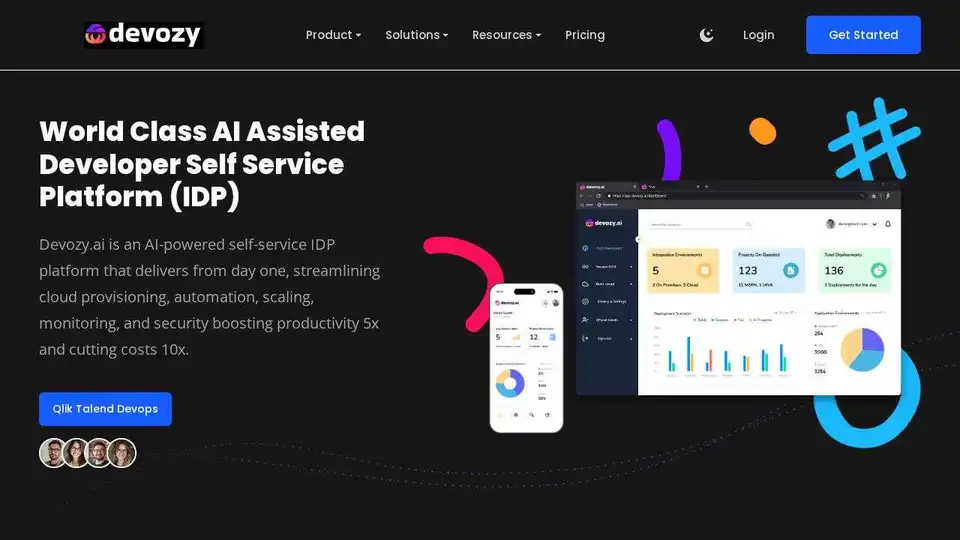
Devozy.ai is a self-service DevOps platform designed for IT teams to automate software deployment across multi-cloud environments. It offers CI/CD pipelines, cloud provisioning, and scaling solutions.
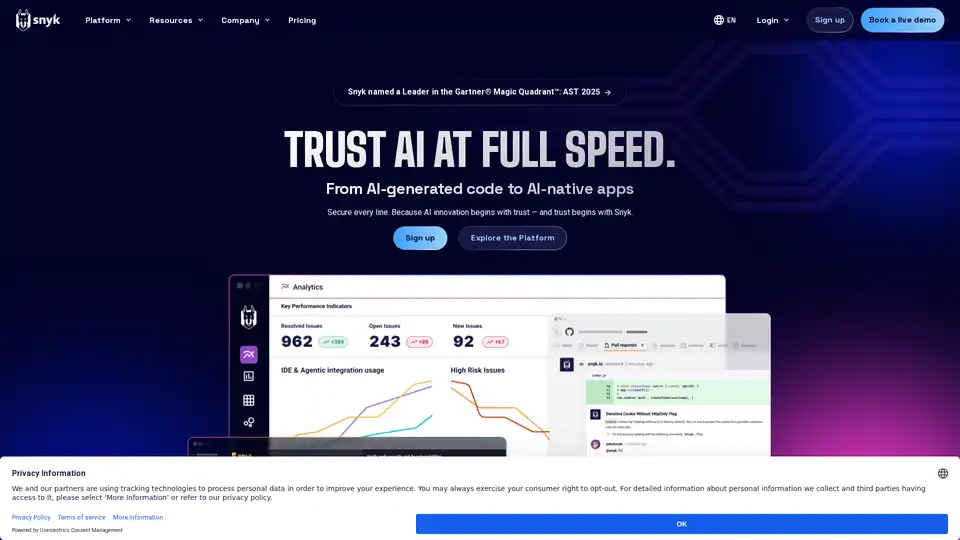
Snyk is an AI-powered developer security platform that helps companies secure their applications from AI-generated code to AI-native apps. It provides tools for SAST, SCA, container security, IaC security, and API & Web security.

Sanctuary AI develops industrial-grade humanoid robots, like Phoenix, to address labor shortages in industries like manufacturing and logistics. They focus on dexterity, tactile feedback, and AI-driven autonomous work.