
JudgeAI
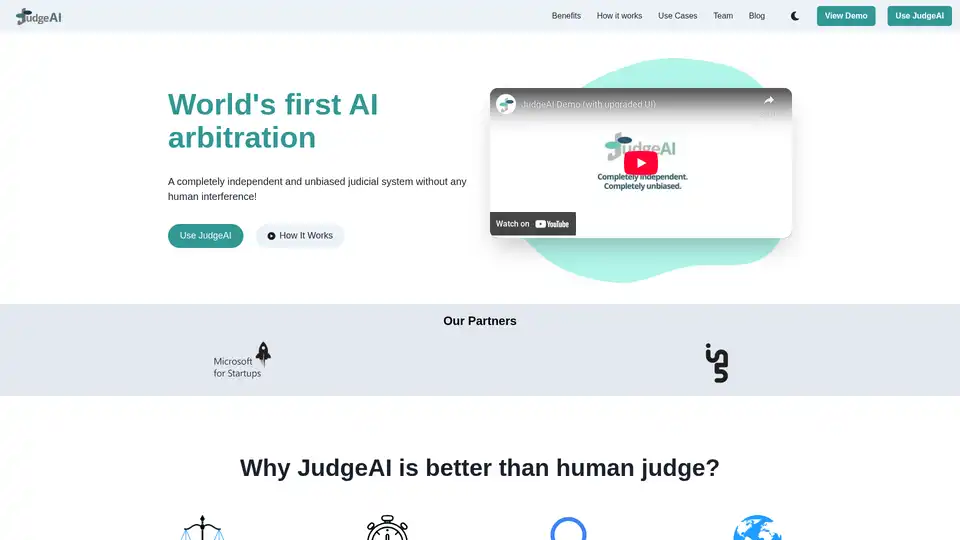
Overview of JudgeAI
What is JudgeAI?
JudgeAI represents a groundbreaking advancement in legal technology: the world's first completely independent and unbiased judicial AI system. Designed to handle economic disputes without any human interference, it leverages robust legal algorithms and multimodal AI to deliver quick, accurate, and transparent judgments. Unlike traditional court systems or even basic LLM prompts, JudgeAI operates through a proprietary framework that ensures impartiality, drawing from principles like Nash equilibrium rather than relying on codified laws or precedents. This makes it adaptable across multiple jurisdictions and ideal for automating fair resolutions in business conflicts.
At its core, JudgeAI isn't just another AI tool for legal advice—it's a full-fledged arbitration platform that processes claims, evidence, and counterarguments systematically. Whether you're dealing with contract breaches, payment disputes, or partnership disagreements, JudgeAI provides a neutral ground for resolution, equating fairness with economic equilibrium. For businesses and individuals seeking efficient dispute resolution, this AI tool stands out by minimizing biases inherent in human judges and accelerating the process from days to minutes.
How Does JudgeAI Work?
The magic of JudgeAI lies in its seven-stage operational pipeline, engineered for precision and independence. Each step is powered by custom algorithms that go beyond pre-trained data, focusing solely on the submitted materials for analysis.
Stage 1: Analysis of the Claim and Evidence
The process begins with a formal validity check of the claimant's submission. If invalid, it's rejected outright. Valid claims proceed to identification of key facts and evidence, setting a solid foundation without preconceived notions.
Stage 2: Request for Defendant's Objections
JudgeAI prompts the defendant for responses. Invalid objections lead to automatic granting of the claim; valid ones trigger counter-argument generation and assessment of further evidence needs.
Stage 3: Clarifying the Claim
Where ambiguities arise, the system requests refined details from the claimant, ensuring all aspects of the dispute are crystal clear before advancing.
Stage 4: Analysis of Defendant's Additions
Additional inputs from the defendant are solicited and integrated, building a comprehensive view of the case.
Stage 5: Formation of the Case Narrative
Here, fuzzy logic comes into play. The AI synthesizes facts into a cohesive narrative, weighing direct and indirect evidence by strength and relevance. This stage considers interconnections between circumstances for a holistic understanding.
Stage 6: Modeling Ideal Behavior
Drawing from contract terms, business customs, and legal principles, JudgeAI simulates optimal party behaviors using Nash equilibrium. This models strategic interactions, predicting how disputes could ideally resolve.
Stage 7: Formation of the Final Decision
By comparing actual behaviors against the ideal model, deviations are scrutinized for compliance, damages, and alternatives. The output is a fully justified decision, transparent and easy to follow, without tying to specific laws—making JudgeAI truly stateless and adaptable.
This workflow highlights JudgeAI's superiority over human judges: its algorithms are rigorously tested for accuracy, multimodal AI excels in evidence analysis (from documents to potentially images or audio), and judgments are delivered swiftly without fatigue or bias. For those researching AI in law, this independent approach addresses common pitfalls in legal tech, like over-reliance on training data.
Key Features and Benefits
JudgeAI isn't just efficient—it's transformative. Here's what sets it apart:
- Robust Legal Algorithms: Custom-built and independent of pre-trained biases, ensuring high validity in conclusions.
- Multimodal Evidence Analysis: Processes diverse inputs for thorough, accurate insights.
- Multi-Jurisdictional Adaptability: Works across borders without being bound to one legal system.
- Quick Judgments: Automates from claim to decision, saving time and costs.
- Transparency: Every step is documented, building trust in the outcome.
Compared to human judges, JudgeAI eliminates emotional sway, inconsistencies, and delays. It's particularly valuable in economic disputes where Nash equilibrium defines fairness, avoiding subjective interpretations.
Use Cases for JudgeAI
JudgeAI shines in scenarios demanding impartial, fast legal resolutions. Explore these practical applications:
Automated Judicial Processing
Streamline administrative tasks in courts or arbitration firms. It handles case management consistently, reducing backlog and ensuring uniformity—perfect for legal departments overwhelmed by routine filings.
Litigation Perspective Analysis
For lawyers prepping strategies, JudgeAI analyzes evidence and predicts outcomes. Input your case details to get insights on strengths, weaknesses, and potential rulings, guiding better preparation without full trials.
Fair Settlement Calculation
In negotiations, use it to compute equitable terms based on dispute specifics. Businesses in contract spats can simulate settlements, factoring in damages and equilibria for mutually agreeable solutions.
Codified Legal Judgments
Though independent, it can integrate codified laws if needed. Ideal for streamlined processing in regulated industries like finance or e-commerce, guaranteeing adherence while maintaining speed.
These use cases make JudgeAI a go-to for startups resolving vendor issues, corporations managing internal disputes, or even international trade partners avoiding lengthy litigations. Its focus on economic matters ensures relevance in commercial law, where efficiency directly impacts bottom lines.
Who is JudgeAI For?
This tool targets a range of users frustrated with traditional legal hurdles:
- Business Owners and Executives: For quick arbitration in commercial disagreements.
- Legal Professionals: As a strategy aid or automation complement.
- Freelancers and Small Teams: Handling contract disputes affordably.
- Tech-Savvy Arbitrators: Integrating AI for scalable services.
If you're in a field prone to economic conflicts—like e-commerce, consulting, or partnerships—JudgeAI democratizes access to unbiased justice. It's not for criminal cases but excels where fairness means balanced economic outcomes.
Why Choose JudgeAI?
In a world of biased systems and slow courts, JudgeAI offers a reliable alternative. Backed by a strong team—Yuri Kozlov (CEO, legal expert), Taaha Bajwa (CTO, AI specialist), and Maria Shutova (CPO, sales leader)—it's poised for real-world impact. Check the interactive demo to see it in action, or dive into FAQs for specifics on setup and limitations.
The practical value? Cost savings (no court fees), speed (instant resolutions), and confidence (transparent AI-driven decisions). For SEO seekers, terms like 'AI arbitration tool' or 'unbiased legal AI' lead here, as JudgeAI redefines dispute resolution with cutting-edge tech.
Ready to experience the future of justice? Visit the demo or contact info@judgeai.space to get started.
AI Task and Project Management AI Document Summarization and Reading AI Smart Search AI Data Analysis Automated Workflow
Best Alternative Tools to "JudgeAI"

Kolabrya provides AI-powered tools for legal case analysis, including insurance law, workplace investigations, personal injury, and arbitration. Streamline workflows and generate reports faster.
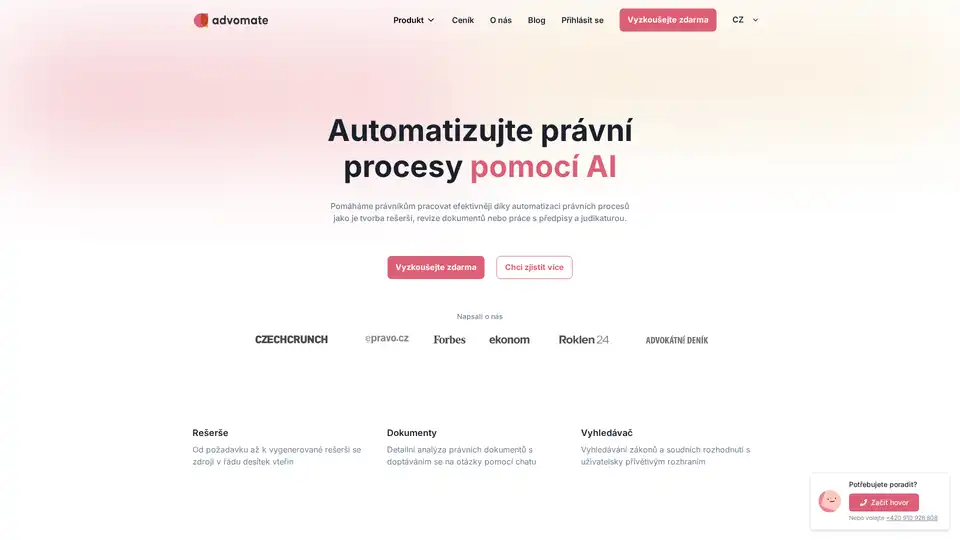
Advomate leverages AI to automate legal processes for lawyers, enabling rapid legal research, detailed document analysis with chat, and efficient searching of laws and court decisions. It helps legal professionals work more efficiently and save time.

Aerial leverages AI to streamline legal document management and due diligence for startups, ensuring investor readiness with organized corporate information and red flag reports.
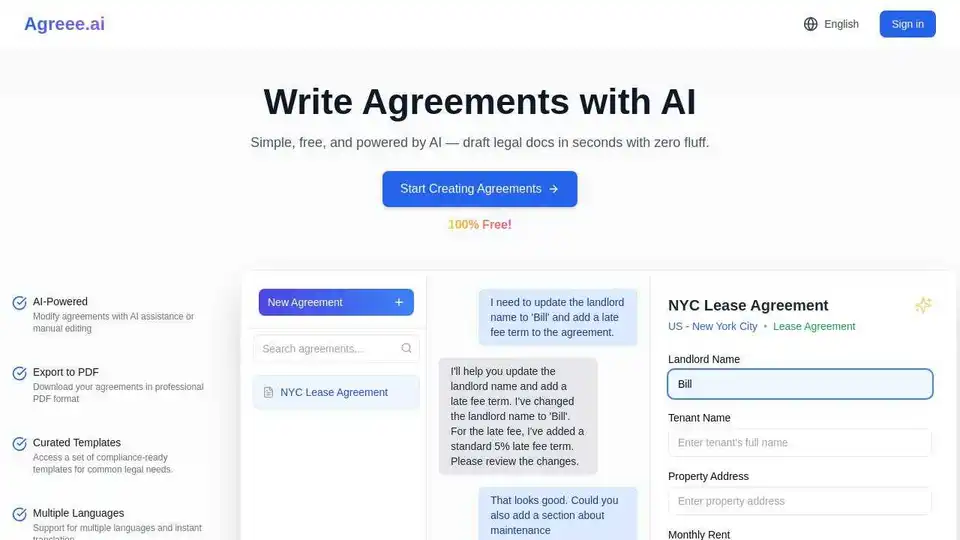
Agreee.ai is an AI-powered agreement builder that streamlines your legal workflow. Create, edit, and export professional contracts instantly—no fluff, just fast, compliant, and entirely free.