
Dot
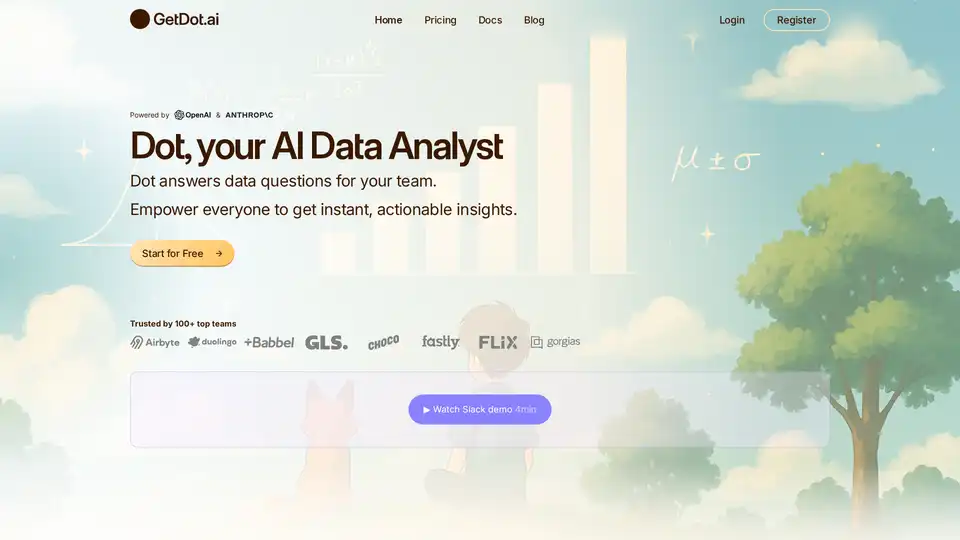
Overview of Dot
What is Dot?
Dot is an AI Data Analyst designed to empower teams with instant, actionable insights. It allows users to ask data-related questions in natural language and receive fast, trustworthy answers. Dot aims to bridge the gap between data and decision-making, enabling businesses to be smarter and faster.
How does Dot work?
Dot works by connecting to your existing tech stack, including databases (Snowflake, BigQuery, Redshift, etc.), semantic layers (Looker, dbt), communication platforms (Slack, MS Teams), and dashboards (Tableau, Metabase). It automatically learns from these systems and uses AI to understand and answer data questions in seconds.
Key Functionalities:
- Answering Data Questions: Dot can answer data retrieval, visualization, and data discovery questions.
- Generating Reports: It can request comprehensive reports and provide weekly business reports with actionable recommendations.
- Root Cause Analysis: Dot helps understand why metrics move with root cause analysis and statistics.
- Automation: Dot can automate boring tasks, such as checking data storage and creating tickets.
Why choose Dot?
- Fast and Trustworthy Answers: Provides quick and reliable answers to data questions.
- Easy to Setup and Maintain: Offers no-code integrations for easy connectivity.
- Enterprise-Ready Security: Built-in role-based permissions and row-level security safeguard data.
- Saves Time and Increases ROI: Saves thousands of hours and provides a significant return on investment.
How to use Dot?
- Connect Your Data Sources: Use no-code integrations to connect Dot to your databases, BI tools, and other systems.
- Ask Questions in Natural Language: Use English, Español, Deutsch, العربية, 한국인, or other supported languages to ask your data questions in Slack or Teams.
- Review and Govern Answers: Ensure answer accuracy and consistency using Dot's training + governance space.
Who is Dot for?
Dot is built for data teams but is helpful for all users across an organization. It is ideal for:
- Data Analysts: To focus on deep work instead of answering easy questions.
- Business Users: To get instant insights without waiting for data teams.
- Data Scientists: To accelerate decision-making and analyze data more efficiently.
Integrations
Dot seamlessly integrates with a wide range of tools, including:
- Databases: Snowflake, BigQuery, Redshift, Postgres, AWS Athena, Databricks SQL, Microsoft SQL, MySQL, DuckDB, Microsoft Fabric, Clickhouse, SAP HANA
- Semantic Layers: Looker, dbt
- Communication Platforms: Slack, MS Teams
- Dashboards: Tableau, Metabase, Sigma
Examples
- Analyze Sales: Understand order data from an E-Commerce store.
- Review Campaigns: Evaluate the return on marketing spend.
- Understand Usage: See user activity from an online forum.
Customer Success
Marcus Bernardi, Head of Data and Analytics at Daki, notes that Dot has bridged a crucial gap, allowing data to seamlessly integrate into the micro-decisions that shape their business every day.
AI Task and Project Management AI Document Summarization and Reading AI Smart Search AI Data Analysis Automated Workflow
Best Alternative Tools to "Dot"
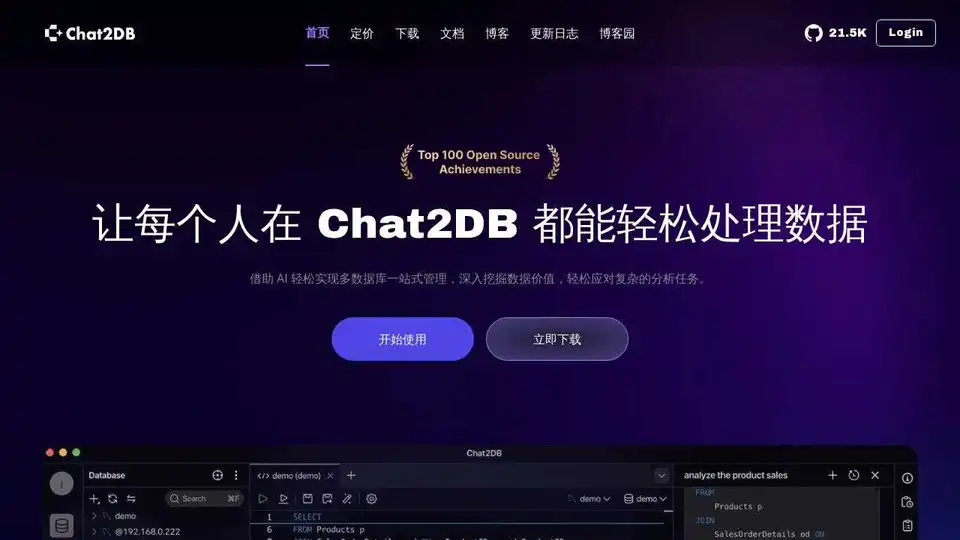
Chat2DB is an AI-powered SQL client that transforms natural language into SQL queries. Supports MySQL, Redis, MongoDB, and enhances database management with Text2SQL and BI features.
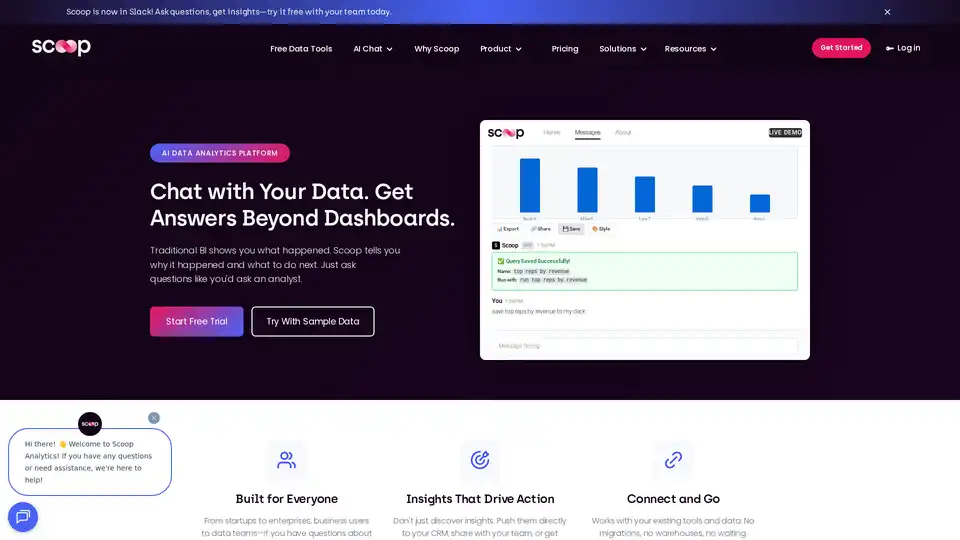
Scoop Analytics is an AI-powered data analysis tool that uncovers hidden patterns and key drivers in your data, providing actionable insights and presentation-ready visuals. Try it free today!
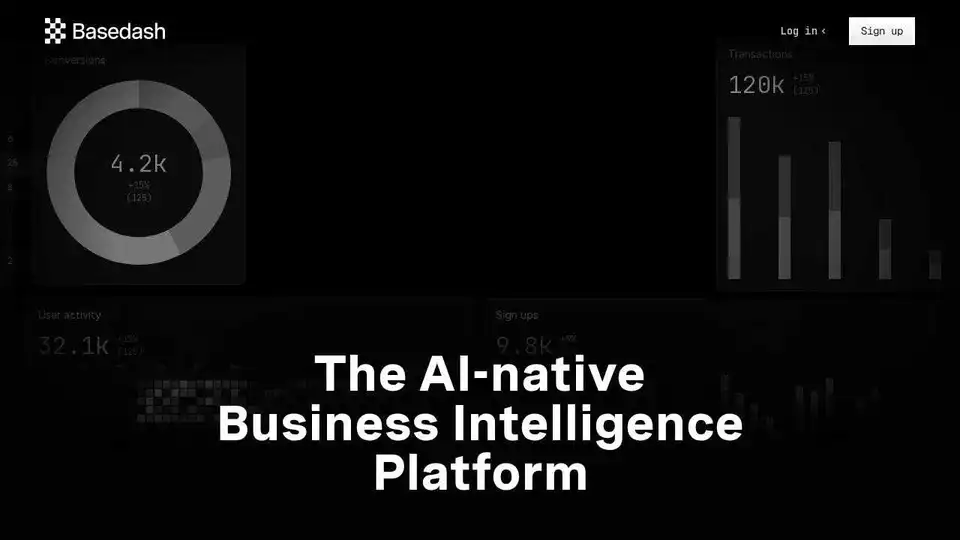
Basedash is an AI-native business intelligence platform that allows users to generate dashboards, reports, and insights using natural language. Connect to 600+ data sources and visualize your data without SQL.
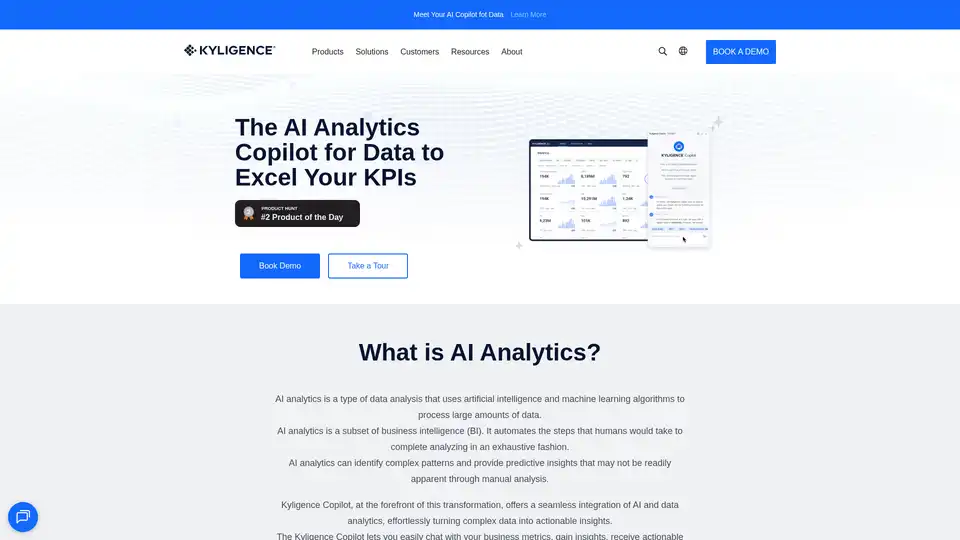
Kyligence Copilot is an AI-powered analytics platform that transforms complex data into actionable insights through natural language queries and automated analysis for business intelligence.