
DataGPT
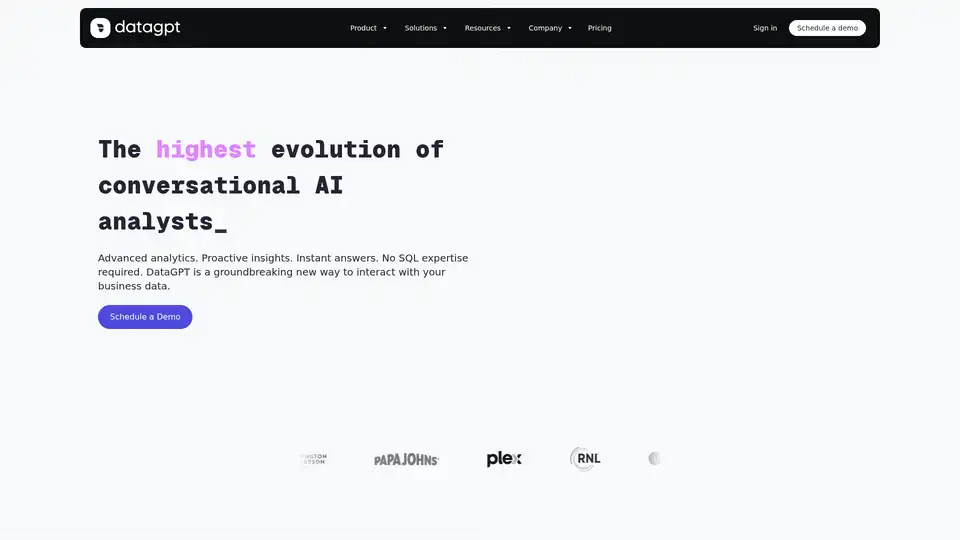
Overview of DataGPT
What is DataGPT?
DataGPT is a revolutionary conversational AI data analyst designed to provide advanced analytics, proactive insights, and instant answers without the need for SQL expertise. It represents a significant evolution in how businesses interact with their data, moving beyond traditional Business Intelligence (BI) tools and underwhelming text-to-SQL AI solutions.
How does DataGPT work?
Unlike simple SQL wrappers, DataGPT utilizes its AI Analysts to develop a plan, execute that plan through meaningful comparisons and deep data dives, and curate the results. This transforms a question into actionable analysis, providing trusted insights that go deeper into your data's most important aspects. DataGPT uses proprietary technology, including a data connection, schema, compute engine, embedding model, analytics engine, and databoard, to run an AI agent on large datasets.
Key Features and Benefits:
- Q&A at Your Fingertips: Simply ask DataGPT questions in natural language to receive analyst-grade answers within seconds.
- Proactive Insights: Set up custom Daily Summaries and Email Notifications that proactively analyze data, highlighting critical anomalies, trends, and key drivers.
- Data Navigator: Empowers team members to explore data with ease, view key metrics, drill down into details, and uncover the "why" behind changes with complete accuracy.
- High question comprehension and flexibility: Configure data once to get reliable answers every time. DataGPT's schema configuration incorporates data definition, metric calculations, and business context for consistent and meaningful insights.
- Executes thousands of queries and statistical tests in milliseconds: DataGPT’s unique architecture overcomes the limitations of traditional Generative AI, delivering rapid, trustworthy analytics with zero hallucinations.
DataGPT vs. Traditional BI Tools and SQL Wrappers
DataGPT goes beyond descriptive analysis, offering key driver analysis, anomaly detection, trend analysis, correlation analysis, and adjustments for seasonality. Here's a breakdown:
| Analysis | Example |
|---|---|
| Descriptive | What is my revenue this week vs last week? |
| Key Driver | Why did my revenue drop this week? |
| Anomaly | Are there any surprises in my revenue metric this month? |
| Trend | Are there any notable trends in our revenue this month? |
| Correlations | What is the correlation between revenue and bounces? |
| Adjust for seasonality | Is this conversion rate normal for this time of year? |
Reviews and Testimonials:
DataGPT has garnered positive reviews from industry experts and users alike:
- Krishna Roy, Senior Research Analyst at S&P Global: Notes that DataGPT's homegrown analytics and compute engines allow for rapid, cost-efficient analysis, handling complex questions faster and more accurately than typical SQL wrapper tools.
- Dan Calzone, Director of Growth at Plex: Praises DataGPT for transforming the ease and speed of data usage, acting as a personal data analyst at his fingertips.
- Ben-Zion Benkhin, CEO & Founder of Wombo: Highlights the transformative impact of DataGPT on their analytics, providing instant answers that previously required weeks of work.
Why choose DataGPT?
DataGPT aims to solve the issues of outdated BI and underwhelming text-to-SQL AI. With a focus on enabling users to go beyond dashboards and find more meaningful insights, DataGPT helps avoid reporting backlogs, dashboard paralysis, and vanity metrics. DataGPT executes thousands of queries and statistical tests in milliseconds. DataGPT’s unique architecture overcomes the limitations of traditional Generative AI, delivering rapid, trustworthy analytics with zero hallucinations.
Who is DataGPT for?
DataGPT is designed for business decision-makers and teams who need quick, accurate, and actionable insights from their data. It is particularly useful for those who lack SQL expertise or find traditional BI tools too complex and time-intensive.
How to use DataGPT?
- Connect your data: DataGPT integrates with various data sources.
- Configure your schema: Set up your data definitions, metric calculations, and business context.
- Ask questions: Use natural language to ask data-related questions.
- Receive answers: DataGPT interprets the questions and responds with comprehensive answers supported by relevant visualizations.
DataGPT empowers users to jumpstart their data-driven decision-making skills through its blog and community resources. It's a product developed and owned by Comparative, Inc.
In conclusion, DataGPT is an invaluable tool for anyone looking to extract meaningful insights from their data quickly and efficiently. It's perfect for businesses seeking to move beyond traditional BI tools and leverage the power of conversational AI for data analysis.
AI Task and Project Management AI Document Summarization and Reading AI Smart Search AI Data Analysis Automated Workflow
Best Alternative Tools to "DataGPT"
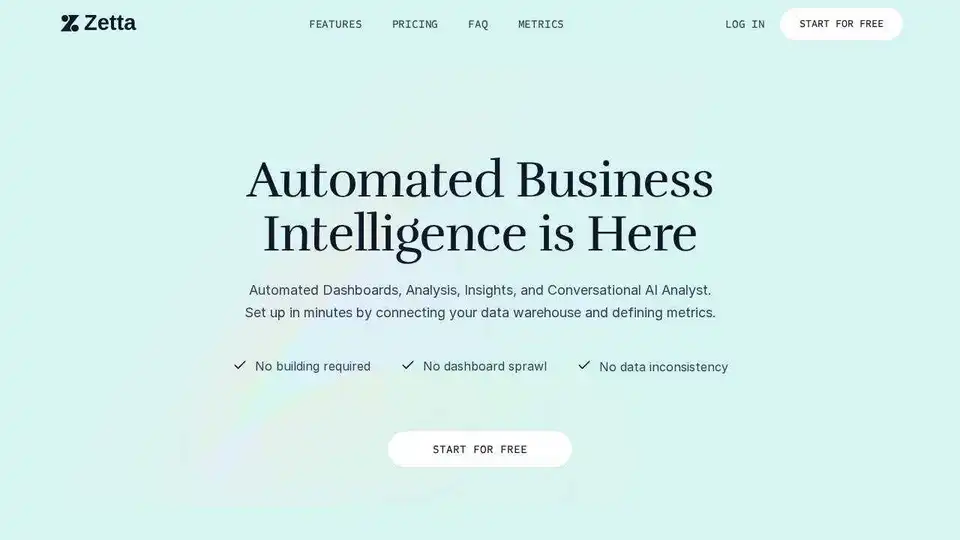
Zetta is an AI-powered data analytics platform providing automated dashboards, AI analyst, and insights for business intelligence. Start free and gain data clarity without a data team.
Basejump AI revolutionizes data analytics by enabling natural language conversations with your database. Get instant, accurate insights without SQL expertise through AI-powered query generation and data visualization.
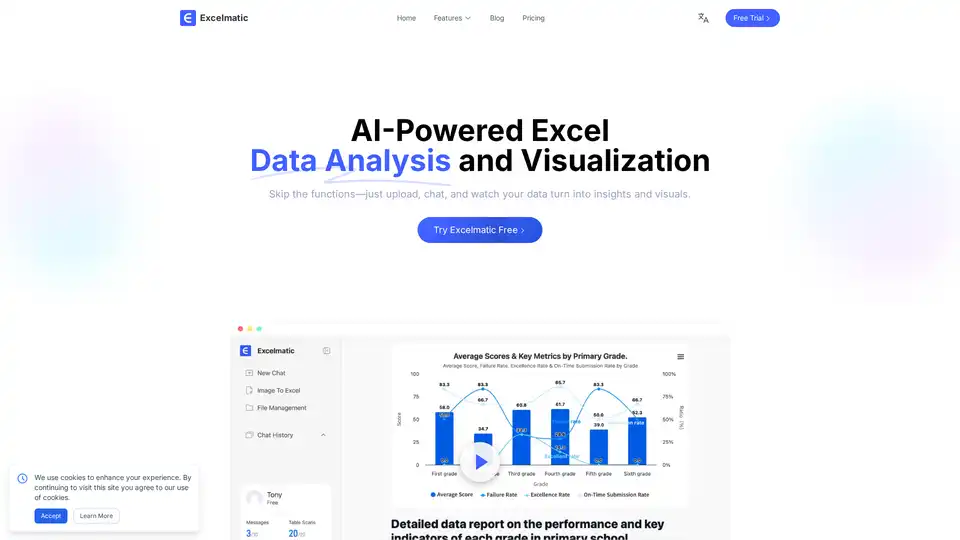
Excelmatic is an AI-powered tool that simplifies Excel data analysis and visualization. Upload your Excel file, ask questions in plain English, and get instant insights and charts without needing complex formulas.
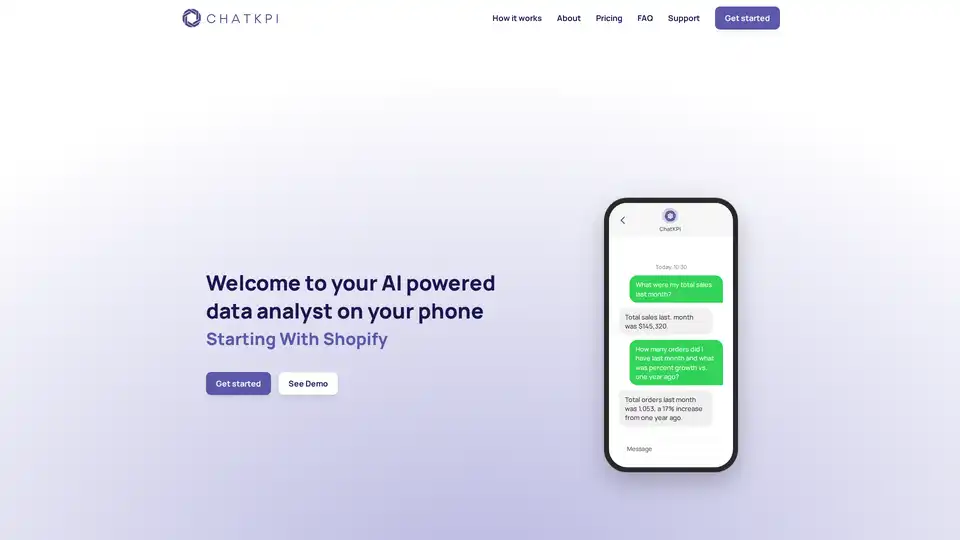
ChatKPI is an AI-powered data analyst app for Shopify. Get real-time sales trends, product insights, and customer behavior analysis via text. Make smarter, data-driven decisions for your Shopify store, anytime, anywhere.